Web Summit 2026 Review: Lisbon, AI agents and a storm that changed the week
Web Summit 2026 will probably be remembered for the robots, the agents and the scale of the AI conversation. For me, it will also be remembered as the year Lisbon’s weather gave the whole event an unplanned test of resilience
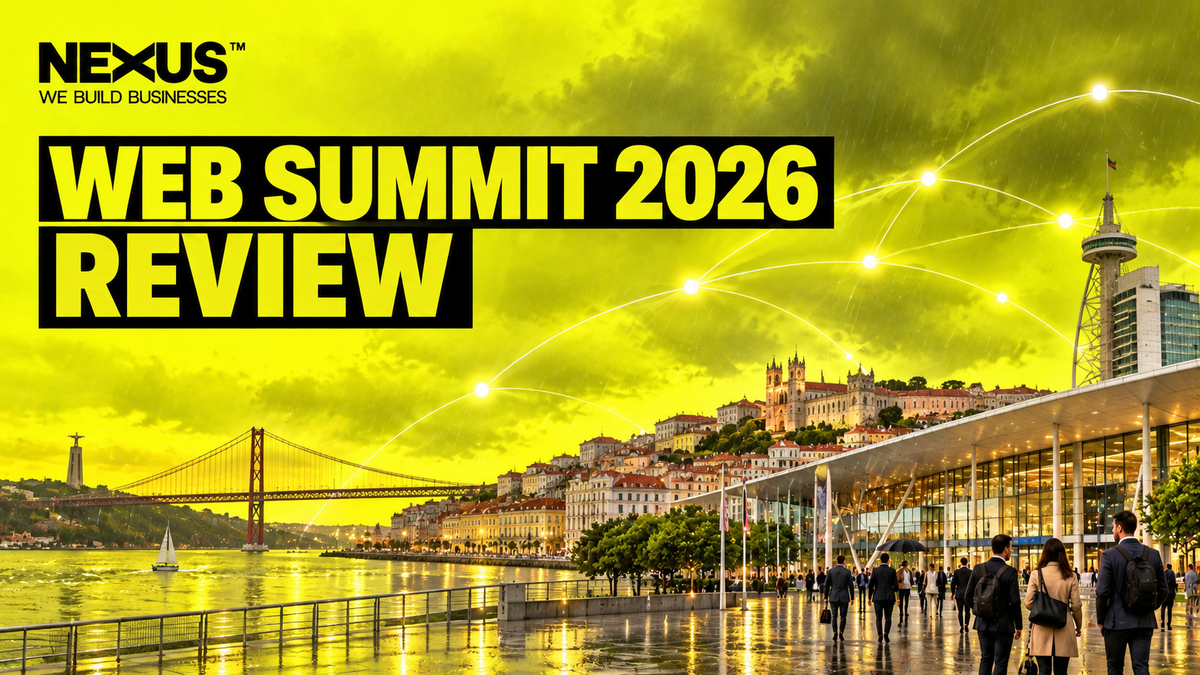
Web Summit 2026 was one of those weeks where the tech conference and the weather became equally memorable. I was in Lisbon for the event, and while the programme was packed with AI, robots, agents and the future of work, Storm Charles ended up stealing a full day of the show.
There was a strange contrast between the scale of the event and the sense that everything could be disrupted at any moment. Lisbon was full of people in conference lanyards, founders pitching between meetings, investors moving from one side event to another, and speakers trying to work out whether their sessions would still go ahead. Then the weather warnings became impossible to ignore.
A storm with a sense of timing
The summit ran from 9 to 12 November at the Lisbon International Fair and MEO Arena, with more than 70,000 people expected across the four days. Then, on the Tuesday evening, organisers announced that Wednesday’s entire programme would be cancelled after the Portuguese government advised against opening the venue because of Storm Charles, high winds, tidal flooding and transport disruption.
I remember the moment the news started spreading. At first people assumed it would be a delay or a few cancelled sessions. Then it became clear that the whole day was off. The atmosphere changed quickly. Some people were frustrated, especially those who had paid for tickets, flown in for specific meetings or built their whole week around a tight schedule. Others took it in their stride and started rearranging everything.
There was something surreal about walking around a city built for a huge global tech event while everyone checked weather updates, moved meetings to cafes and hotel lobbies, and tried to work out whether the next day would happen. The predicted conditions did not fully materialise in the end, but the decision was still made, and Wednesday disappeared from the schedule.
When the event reopened on Thursday, it felt busier than ever. People were trying to recover lost meetings, squeeze in conversations and make the most of the final day. It gave the whole week a slightly improvised energy, which in some ways made it more human. The best conversations often happened away from the main stages, over coffee, in queues, at side events or in the corners of hotel lobbies where nobody was trying to sound impressive.
AI agents became the main event
The obvious headline theme was AI, but the conversation has moved on from “look what this model can create” to “what can this system actually do?”
AI agents were everywhere. Not just chatbots, but software designed to carry out tasks, make recommendations, coordinate work and increasingly take part in decisions that used to sit firmly with people. The interesting sessions were less about the technology itself and more about the practical questions: how do businesses integrate it, what does it cost, how do you measure results, and where does human judgement still matter?
That last point came up repeatedly. AI can widen what one person is capable of doing, but it does not remove the need for taste, standards, context and accountability. A model can produce a first draft, summarise research or automate part of a workflow, but it still needs someone who understands the outcome that actually matters.
The companies making progress seemed to be the ones treating AI as a way to redesign work, rather than simply bolting a tool onto an old process. If you use AI to write more content but keep the same slow approval process, you may end up with more noise rather than better results. If you use it to remove repetitive work, improve research, test ideas faster and give people more time for judgement, the value becomes much clearer.
There was also a lot of talk about agents working together. Rather than one person prompting one tool, the idea is that different systems can handle research, planning, execution and reporting. That sounds powerful, but it also raises the obvious question: who checks the work? The answer, for now, is still people.
Physical AI arrived
Another shift was the move from AI on a screen to AI in the physical world. Humanoid robots were not just exhibition-floor attractions this year. Several were official speakers, including units from Agibot, Galbot and PrimeBOT, alongside companies working on robotics, logistics, healthcare and manufacturing.
It made the “physical AI” phrase feel less like a conference buzzword and more like a real direction of travel. The discussion is no longer only about generating text, images or code. It is increasingly about systems that can see, move, act and operate in real environments.
Of course, there was still plenty of theatre. Watching a robot walk across a stage or answer questions gets attention, and it is easy to see why it becomes the clip everyone shares. But the more interesting conversations were about what happens behind the scenes: the data, the safety requirements, the cost, the reliability and the practical challenge of getting these systems into workplaces that were not designed for them.
China also had a much bigger presence than I expected. More than 30 Chinese speakers were confirmed in the opening announcements, with companies including Tencent, Xiaomi, XPENG, Moonshot AI and Manus involved, alongside official government delegations. It felt like a clear signal that the global AI race is no longer being framed only around US companies and Silicon Valley.
This is important to understand because it changed the tone of the event. The competition is not just about who has the best model. It is about manufacturing, energy, infrastructure, talent, capital and the ability to turn research into products at scale. The countries and companies that understand that wider system are likely to move faster.
Marketing is changing too
For anyone working in content, community or growth, one of the most useful threads was how AI is changing discovery and buying behaviour.
The idea that stood out was that brands will soon need to communicate with people and with AI agents. If an assistant is helping someone compare options, summarise choices or make a purchase, then the information a business publishes needs to be clear, credible and easy for those systems to understand. That takes the conversation beyond traditional SEO and into generative engine optimisation and answer engine optimisation.
The practical implication is simple: it is not enough to have a good product or a strong social presence. Businesses need to think about how their value is represented when an AI system is the one doing the research. That has big implications for websites, content, reviews, pricing, FAQs and the way expertise is presented online.
It also changes the way content should be created. Generic content is going to become even less useful because AI can produce endless amounts of it. What will stand out is experience, evidence, perspective and a reason to trust the person or business behind the content. That is good news for anyone building a genuine community, sharing real insight or developing a clear point of view.
There was also a useful reality check around payments. While agent-driven commerce sounds inevitable, adoption of the underlying payment protocols is moving more slowly than some of the hype suggests. The technology may be ready before the wider ecosystem is. Businesses should pay attention, but they should not assume that every futuristic demo will become normal behaviour overnight.
My main Web Summit Takeaways
- AI agents are becoming a business operating question, not just a product feature.
- The best use of AI is still human-led: people set the judgement, standards and direction, while AI removes friction and expands capacity.
- Physical AI is moving quickly from demos into sectors such as logistics, healthcare and manufacturing.
- Discovery is changing. Brands need to be visible and credible to both people and AI systems.
- Global AI competition is widening, with China making a much more coordinated and visible push onto the international stage.
- The companies that win will not necessarily be the ones with the flashiest demo. They will be the ones that turn new technology into something useful, reliable and easy for people to adopt.
- A storm can cancel a conference day, but it cannot cancel the conversations, the side events or the determination of people who have flown in to make connections.
The bit nobody planned
Web Summit 2026 will probably be remembered for the robots, the agents and the scale of the AI conversation. For me, it will also be remembered as the year Lisbon’s weather gave the whole event an unplanned test of resilience, and reminded everyone that the most valuable part of any conference is still the people you meet when the schedule falls apart.
Until next year, see you at Web Summit 2027!