
Inside China’s Innovation Engine: What We Learned from a Week Across Hangzhou, Suzhou, and Shanghai
The pace, depth, and ambition of what’s happening across China’s tech ecosystems is something UK businesses can’t afford to ignore
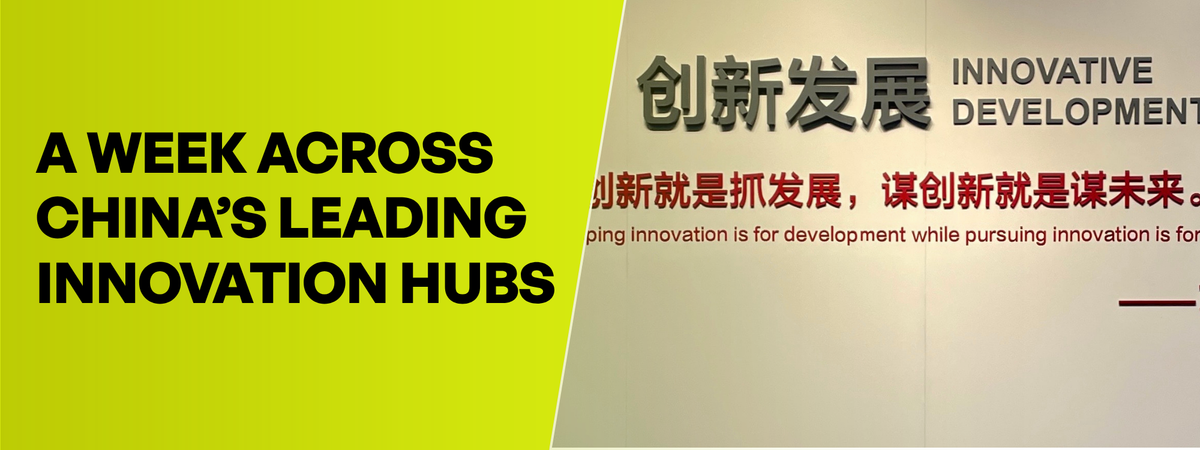
There are moments in business where things just click.
Where the conversations you’ve been having, the trends you’ve been tracking, and the opportunities you’ve been sensing all suddenly come into sharp focus.
For NEXUS, our recent trip to China was one of those moments.
Across Hangzhou, Suzhou, and Shanghai, we didn’t just see innovation, we stepped inside the systems that are driving it at scale. And what became clear, very quickly, is that the pace, depth, and ambition of what’s happening across China’s tech ecosystems is something UK businesses can’t afford to ignore.
This wasn’t a surface-level visit. It was a deep dive into the future of robotics, AI, life sciences, and cross-border collaboration.
And it all started in Hangzhou.
Hangzhou: Where Robotics Stops Being “The Future”
Our first stop was the Hangzhou High-Tech Zone (Binjiang), alongside the China-Britain Business Council. The focus: embodied intelligence and AI.
If you want to understand where robotics is actually heading, not in theory, but in practice, this is where you go.
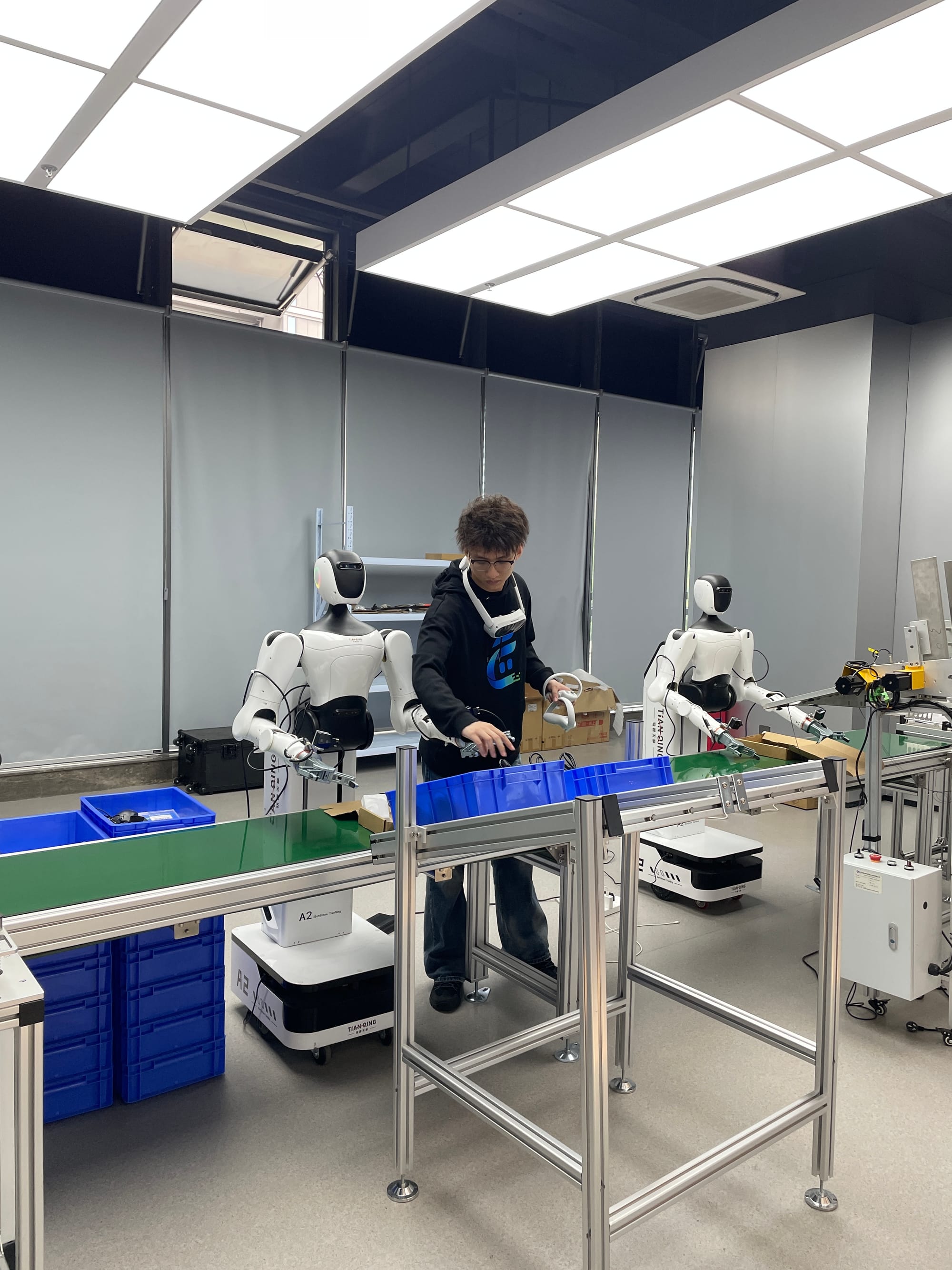
At Unitree Robotics, we saw what global leadership in humanoid robotics looks like up close. These aren’t experimental prototypes tucked away in labs. These are machines already operating on a global stage, from major sporting events to international showcases, deployed across more than half the world.
But what stood out wasn’t just the technology. It was the maturity on show.
This is robotics that has moved beyond curiosity and into commercial reality.
That theme carried through the rest of the day.
At the afternoon seminar, we met companies building the infrastructure behind the next wave of intelligent machines:
- BDCA, pushing boundaries in autonomous navigation across extreme and hazardous environments
- Chingmu, solving one of robotics’ hardest problems...how machines learn to move with precision
- Differential Robotics, designing aerial systems for places humans simply shouldn’t go
Alongside them, platforms like DexRobot revealed the depth behind the scenes, entire ecosystems of R&D centres, researchers, and institutional backing driving continuous progress.
The takeaway?
This isn’t a fragmented ecosystem. It’s coordinated, well-funded, and accelerating.
And that changes the game for the entire world!
Suzhou: The Power of Scale (Done Properly)
If Hangzhou showed us speed, Suzhou Industrial Park (SIP) showed us scale.
SIP is one of those places that keeps coming up in serious conversations about global innovation, and once you’re there, you understand why.
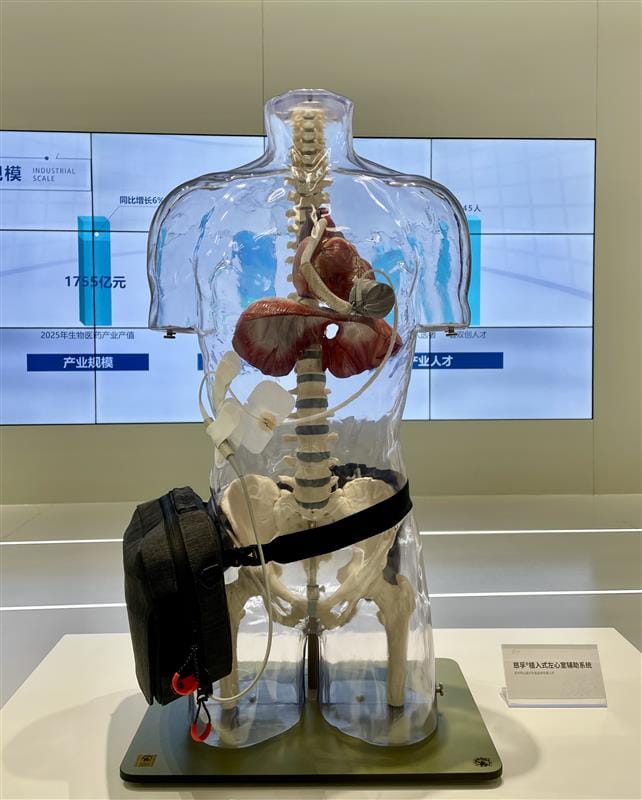
This is thinking well beyond being a “tech hub.” It’s a fully integrated industrial ecosystem. What they have on offer are:
- Over 3,200 national high-tech enterprises
- High-tech industries making up 72.5% of total output
- A biomedical sector alone generating over 175 billion RMB annually
- One of just five nanotech industrial clusters in the world
And then there are the details that stop you in your tracks.
Facilities like the world’s first Vacuum Interconnected Nanotech Workstation, a system so advanced it’s been described as having no comparable equivalent in the United States.
From semiconductors and advanced manufacturing to life sciences and financial services, the entire value chain exists in one place. Research, development, production, funding, it’s all there and fully integrated!
The big opportunity for global businesses wanting to work here in China isn’t just expansion.
It’s about taking this chance to grow at a hyper accelerated pace!
The Human Side of Innovation
Not everything that sticks with you from a trip like this comes from boardrooms and labs.
Sometimes it’s in the simplest moments.
We ended our day in Suzhou with dinner at a local spot near Gusu Bridge, ranked highly, packed with locals, and serving incredible food for under £10 a head.
It’s a reminder that even in the world’s most advanced innovation hubs, there’s still room for culture, community, and simplicity!
Investment, Influence, and Global Ambition
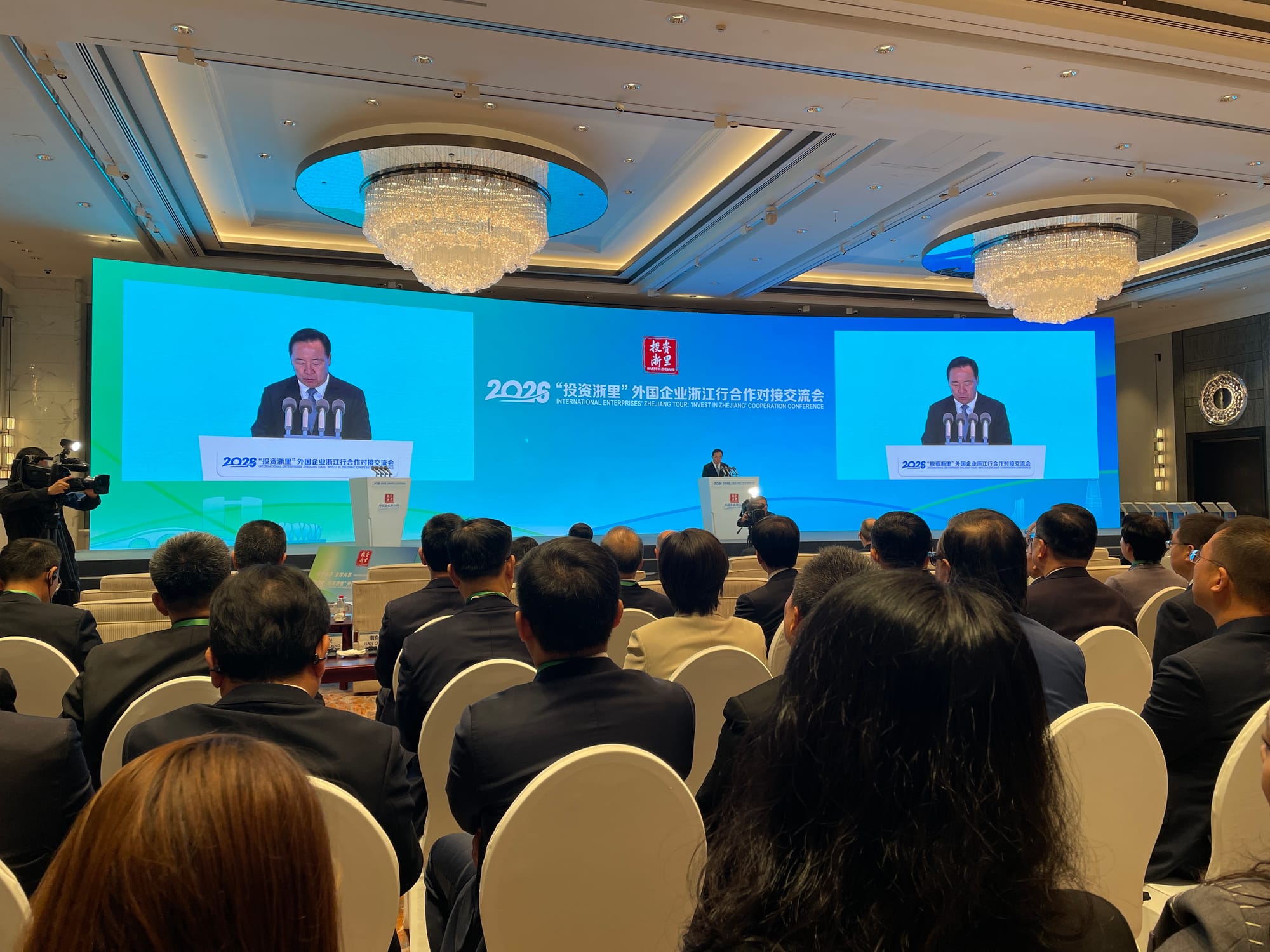
Back in Hangzhou, the week wrapped up at the 2026 “Invest in Zhejiang” International Enterprises Cooperation Conference.
From senior provincial leadership to global business figures, the message was consistent: Zhejiang is open, ambitious, and actively seeking international collaboration.
The room of high quality attendees certainly reflected that.
Leaders from major institutions, founders of cutting-edge companies, and global investors all in one place, aligned around the same direction of travel.
For NEXUS, it opened doors to conversations that will continue well beyond this trip, including early-stage discussions with semiconductor companies and major financial institutions.
The momentum around foreign investment here isn’t theoretical.
It’s happening....right now!
Shanghai: Where Global Ecosystems Intersect
We finished our trip in Shanghai, a city that doesn’t just participate in global innovation, it connects it.
Meetings with organisations like the Swiss Bluefaer Innovation Center highlighted how international collaboration is being actively built, not just discussed. Operating at the intersection of European and Chinese markets, these platforms are creating real pathways for cross-border growth.
And then there are the environments shaping the next generation of innovation.
Spaces like S-Tron China don’t feel like traditional offices. They feel like ecosystems in themselves, blending technology, creativity, music, gaming, and the creator economy into something that reflects where culture and innovation are heading.
It’s a different way of thinking.
And it’s one that’s catching on.
So, What Does This Actually Mean?
It’s easy to walk away from a trip like this impressed.
But the real value comes from understanding what it means in practical terms for business owners and entrepreneurs.
Here are the takeaways we believe matter most:
1. Speed Wins
China’s ability to move from concept to commercialisation is on another level. Ideas don’t sit still, they get built, tested, and deployed fast.
2. Ecosystems Beat Isolation
The strength isn’t just in individual companies. It’s in how everything connects - research, talent, capital, and infrastructure all working together.
3. Talent Density Is a Force Multiplier
Entire teams of PhDs and researchers embedded into companies isn’t unusual, it’s expected. That changes the quality and pace of innovation.
4. Collaboration Is Undervalued by UK Businesses
There are far more opportunities for UK-China partnerships than most businesses realise, especially in deep tech, life sciences, and advanced manufacturing.
5. Culture Still Matters
Even at the cutting edge of technology, the human experience...food, environment, creativity all remain a core part of how ecosystems thrive.
Our Final NEXUS Thoughts
This trip was one that truly captured the imagination of what is possible and what is coming next!
Seeing firsthand what happens when innovation is treated as infrastructure, when ecosystems are built intentionally, and when collaboration is seen as a growth strategy, not a risk.
For NEXUS, this is just the continuation of a deeper engagement with China
For UK businesses more broadly, the opportunity is already there.
The question is whether they’re ready to step into it.
If you're interested in starting, running or scaling your own business, then why not enquire about NEXUS membership here
...and if you're interested in featuring your entrepreneurial journey on the NEXUS Startup Diaries blog, then get in touch and let's share that story with the world!